
how can
Braces and Aligners help?
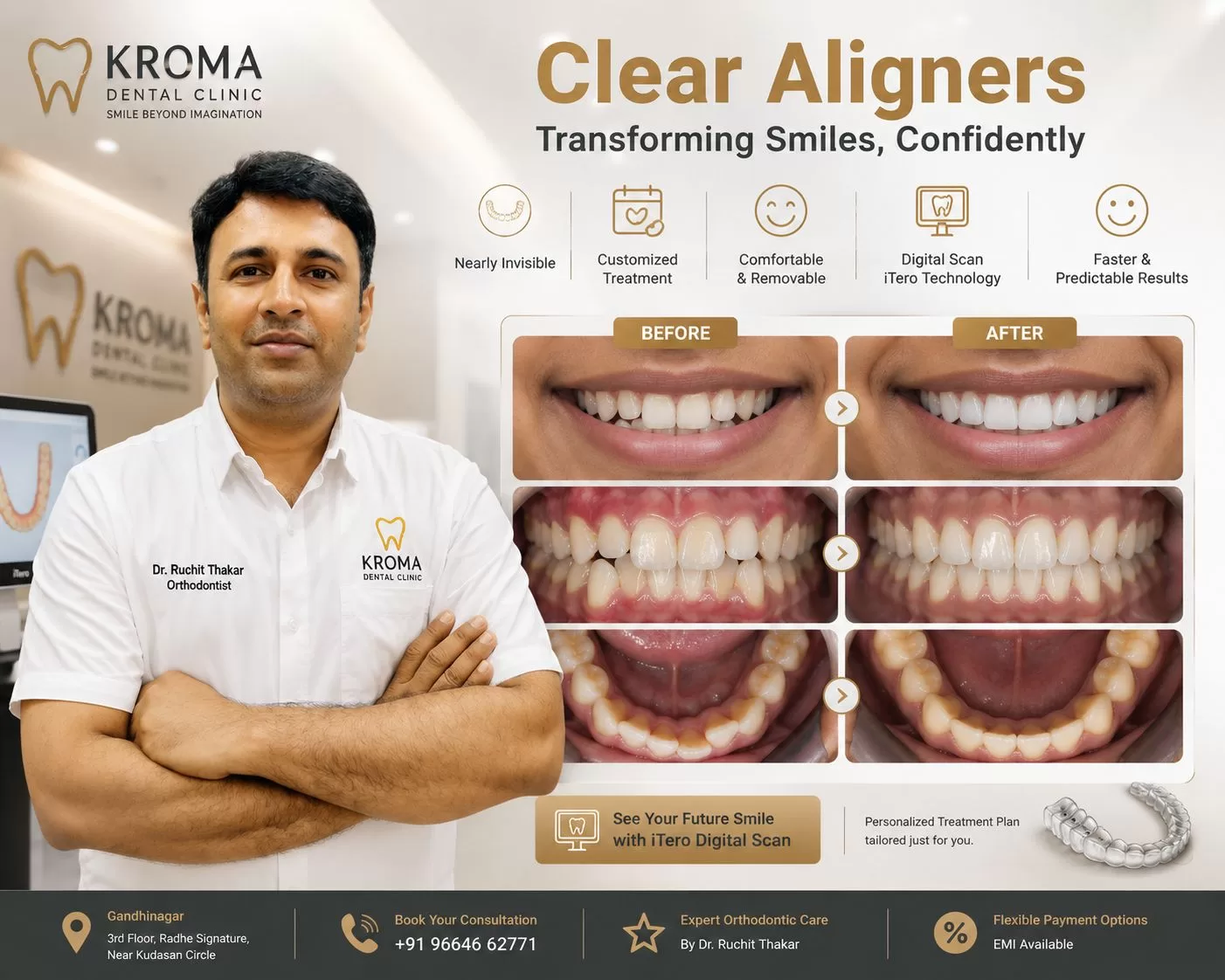
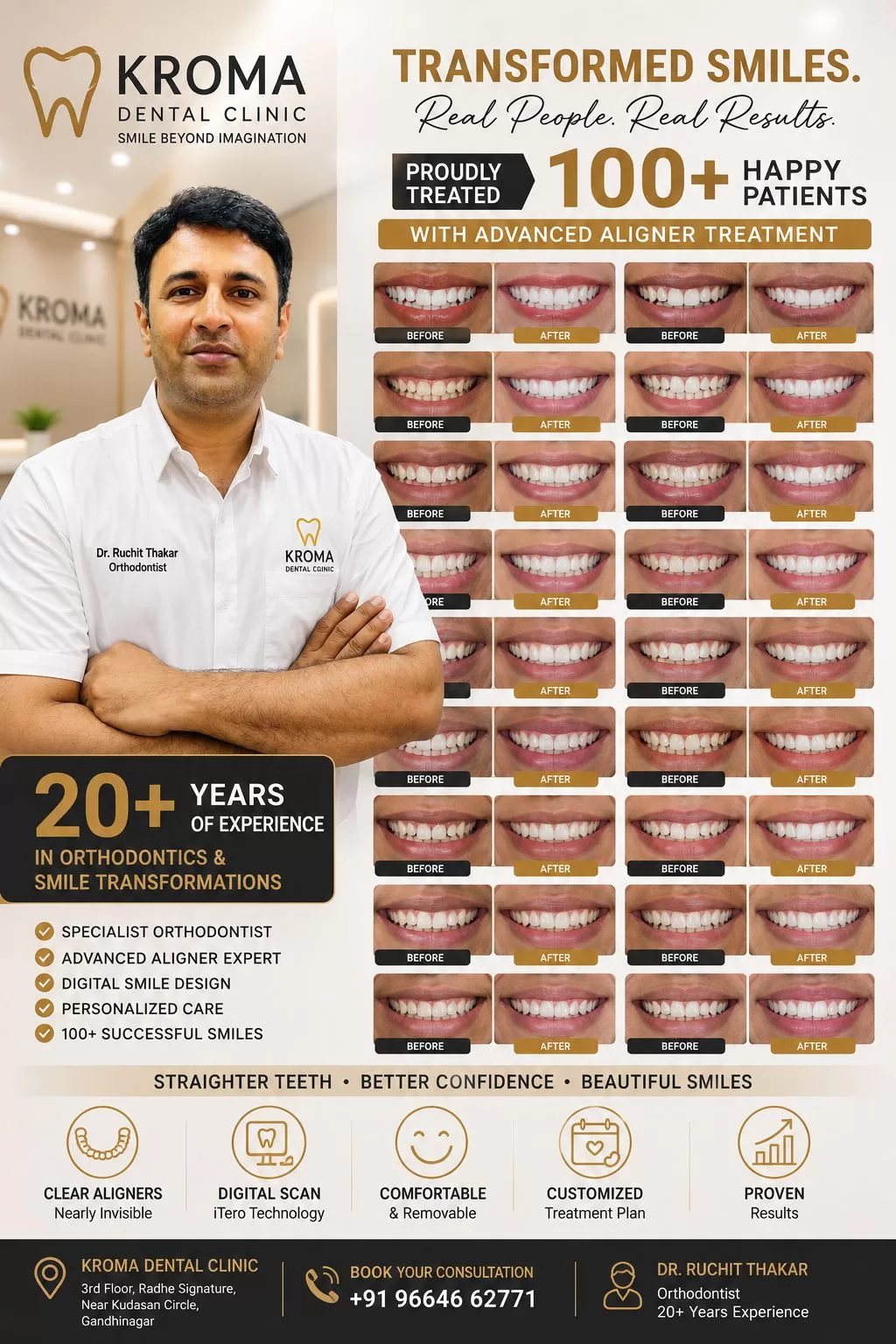
Braces and clear aligners are used to correct crowded teeth, gaps, protruding teeth, bite problems and smile irregularities. Proper alignment not only improves appearance but also enhances oral health and chewing function.
Common Problems We Treat
✔ Crowded Teeth
✔ Gaps Between Teeth
✔ Protruding Front Teeth
✔ Deep Bite
✔ Open Bite
✔ Cross Bite
✔ Jaw Growth Problems in Children
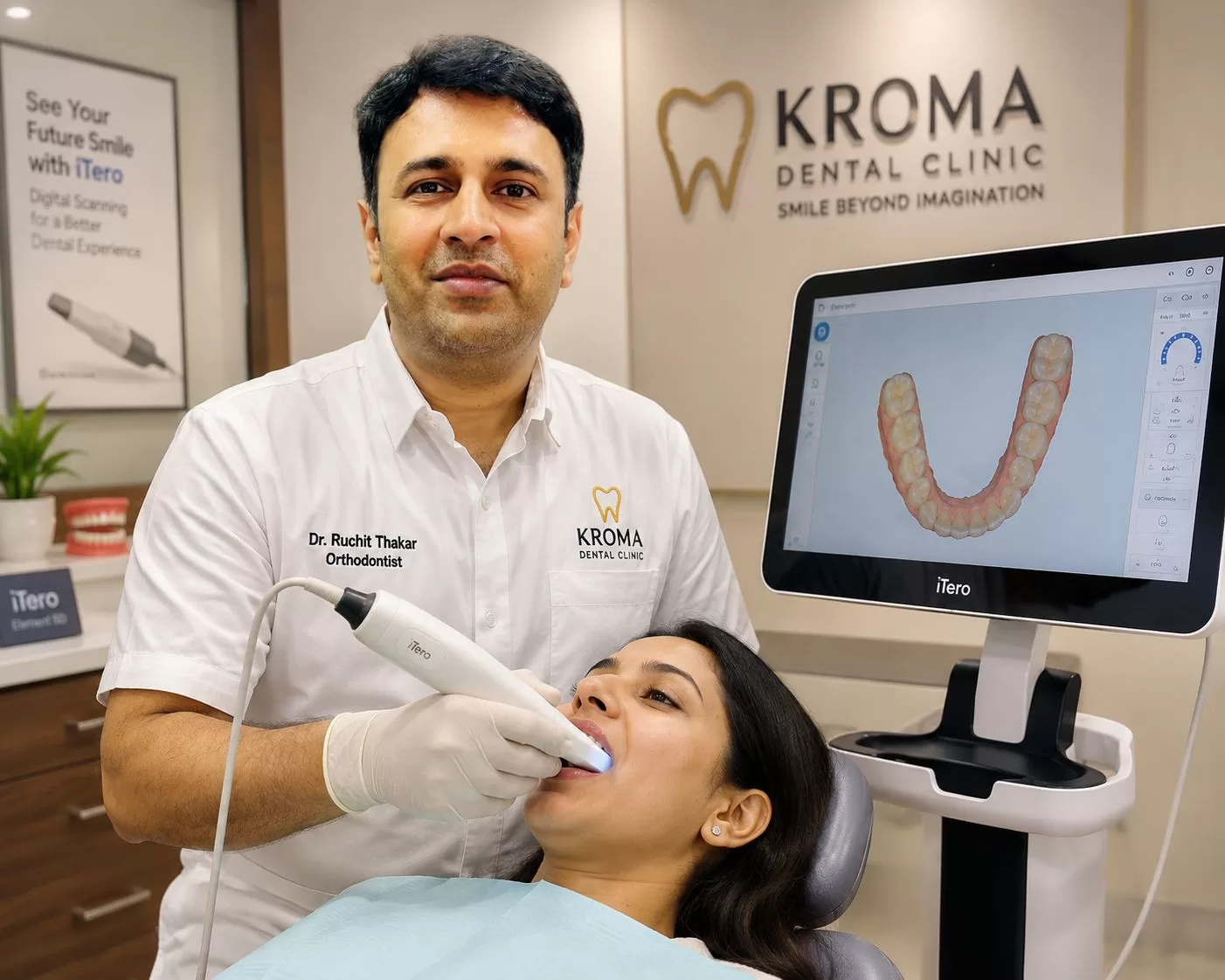
At Kroma Dental Clinic, Dr. Ruchit Thakar provides personalized Metal Braces, Ceramic Braces, Self-Ligating Braces, and Clear Aligner treatment plans for children, teenagers, and adults.
Who Can Benefit From Braces & Aligners?


Children
Early orthodontic treatment by age 7 can guide jaw growth, create space for erupting teeth, and prevent more complex problems in the future.
Teenagers
The ideal age to correct crowded teeth, spacing issues, protruding teeth, and bite irregularities.
Adults
Modern braces and clear aligners allow adults to achieve a straighter smile comfortably and discreetly at any age.
Braces and Alignersin Gandhinagar
FAQs(Frequently Asked Questions)
Will straightening teeth help?
Yes. Straightening teeth improves smile appearance, makes cleaning easier, reduces risk of gum disease, and helps achieve a healthier bite.
Why should one have orthodontic treatment?
Many people have crowded or crooked teeth. Orthodontic treatment will straighten the teeth or move them into a better position. This can improve their appearance and the way the teeth bite together, while also making them easier to clean.
Some people have upper front teeth that stick out and look unsightly. These ‘prominent’ teeth are more likely to be damaged, but orthodontic treatment can move them back into line. Or the way the upper and lower jaws meet can cause teeth to look unsightly and lead to an incorrect bite. Orthodontic treatment may be able to correct both of these problems.
When the teeth don’t meet correctly, this can put strain on the muscles of the jaw, causing jaw and joint problems and sometimes headaches. Orthodontic treatment can help you to bite more evenly and reduce the strain.
At what age should orthodontic treatment be done?
Children should have their first orthodontic evaluation by age 7. However, braces and aligners can be successfully done in teenagers and adults as well.
Who carries out orthodontics?
Your dentist may carry out orthodontic treatment. Or they may send you to a specialist who has extra qualifications. The specialist may be in a practice or in a hospital department, and is called an orthodontist.
What does it involve?
The most important thing is to have a full examination. This will usually involve looking at your teeth, taking x-rays and making plaster models of your teeth.
Your dental team or orthodontist will then discuss what treatment is possible. Once you are sure you want to go ahead, the treatment can start as soon as you have enough permanent teeth.
There is always a need to have teeth taken out to make room?
You may not have enough room for all your permanent teeth. If so, you may need to have some permanent teeth taken out to make space. Your dental team will tell you whether this is the case. Sometimes space can be made using other forms of treatment
How long will it take?
The length of treatment depends on how severe the problem is, and it may take anything from a few months to two-and-a-half years. Most people can be treated in one to two years.
How many visits will it take?
Orthodontic braces usually need adjusting every 4 to 6 weeks. Your orthodontist will tell you how often your brace will need adjusting.
Are there any alternatives to orthodontics?
Cosmetic contouring can be used to improve the appearance of teeth. It is ideal if you have irregular-shaped or slightly crowded teeth.
However, in contouring the teeth a small amount of enamel would be lost. Contouring can also be used to improve the shape and appearance of your gums. These treatments are not recommended for young children
Can orthodontics damage teeth?
The teeth can be damaged if you don’t look after them properly during treatment. The braces themselves will not cause damage, but poor cleaning and too many sugary foods and drinks can cause permanent damage to your teeth. Brackets, wires and braces can trap food and cause more plaque than usual to build up. So you need to clean your teeth and appliance very thoroughly.
How to care for braces and teeth?
It is important to keep having teeth checked by your dental team while you are having orthodontic treatment. You also need to take extra care of your teeth and mouth:
- Clean your teeth carefully every day, including between your teeth where you can. Braces are delicate and you need to make sure you clean them carefully so that they do not break. Your dental team will be able to show you the special techniques to use depending on the appliance you are wearing.
- Cut down on how often you have sugary foods and drinks. Avoid snacks and drinks containing sugars, and fizzy drinks. Also, sticky and hard foods may damage your brace.
Brush your teeth last thing at night and at least one other time during the day. Use a mouthwash if you need to. Your dental team may recommend a stronger fluoride toothpaste, or perhaps a fluoride gel or mouth rinse, for you to use.
Kroma Dental Clinic
3rd floor, Radhe Signature, A 307, Sardar Chowk Rd, opposite Sahjanand city, Kudasan, Gandhinagar, Gujarat 382421
About
Why Us

Best and Latest Technology
Best Patient Care
3D Diagnostics CBCT
19+ Years of Experience
Website Designed by Iravati Solutions.
Copyright 2022 . All rights reserved. Website Designed by Iravati Solutions